Key takeaways
- New or used, the financing structures are the same: lease, decided by the same application.
- The asset’s remaining useful life, not its age alone, drives how a lender sees a used file.
- Private sales and auction purchases can be financed, but the paperwork burden is on you to document the asset.
- A lien search before you buy protects you from inheriting someone else’s debt on the machine.
The used market is where a lot of Canadian businesses do their best buying. A tractor with hours left on it, a CNC centre from a shop that closed, a reefer trailer coming off a fleet cycle: the price gap against new can be the difference between growing this year and waiting. The common worry is that financing gets harder when the equipment is not new. Mostly, it does not. It just gets more specific.
What stays the same with used equipment financing
The structures do not change. A used machine can be financed with a $1-buyout or operating lease, through the same application that covers new equipment: identification, owner information, then the equipment itself. Smaller files are usually decided on the application alone, and above the $250,000 threshold lenders ask for financial statements, exactly as with new equipment.
The broker routing does not change either. One application still reaches multiple funding sources, including the largest Canadian banks and other leasing institutions, and the file is structured around asset type, transaction size and your credit profile. Both lease structures remain on the table, so the accounting and sales tax questions covered in our lease-structure guide apply to a used machine the same way. What changes is the fourth item lenders weigh: the asset itself now has a history, and the file has to tell it.
What lenders actually look at on a used file
A lender’s security is the machine, so on a used file the machine gets more scrutiny. Expect attention on:
- Remaining useful life. A well-maintained excavator can be a stronger asset than a newer machine that has been run hard. Service records help more than most buyers expect.
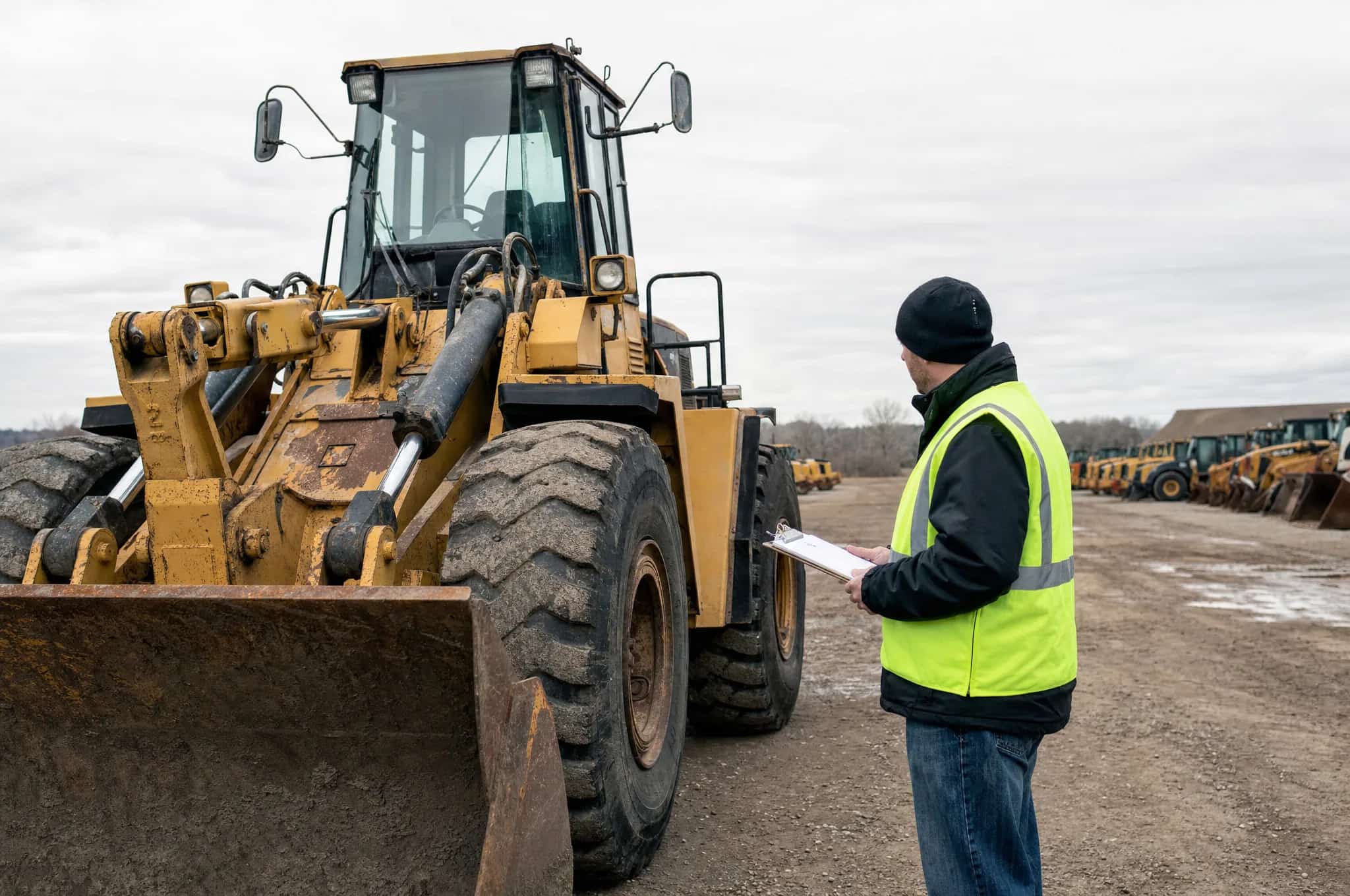
- The seller. Dealer sales come with invoices and often inspections. Private sales and auctions are financeable too, but you carry the burden of documenting what the machine is and what you are paying for it.
- Identification. Serial numbers and, for vehicles, VINs must match the paperwork exactly. Mismatches stall files more often than credit does.
- Existing liens. Used equipment may already secure someone else’s debt. A search of the provincial Personal Property Security Registry, or the RDPRM in Quebec, shows whether the asset is encumbered before you commit.
That last point deserves its own sentence: never buy used equipment without a lien search. If a previous owner’s lender still holds a registered interest, the debt follows the machine, not the seller.
Auction purchases deserve a specific mention because the rhythm is different. An auction gives you a hard deadline and no room to negotiate paperwork afterward, so the preparation has to happen before bidding starts. Get the lot’s serial number from the auction listing, run the lien search on it, and have your financing conversation before auction day rather than after the hammer falls. A pre-arranged file means you bid knowing what the financing supports, instead of winning a machine and then discovering the file cannot carry it.