What we finance, and who funds it
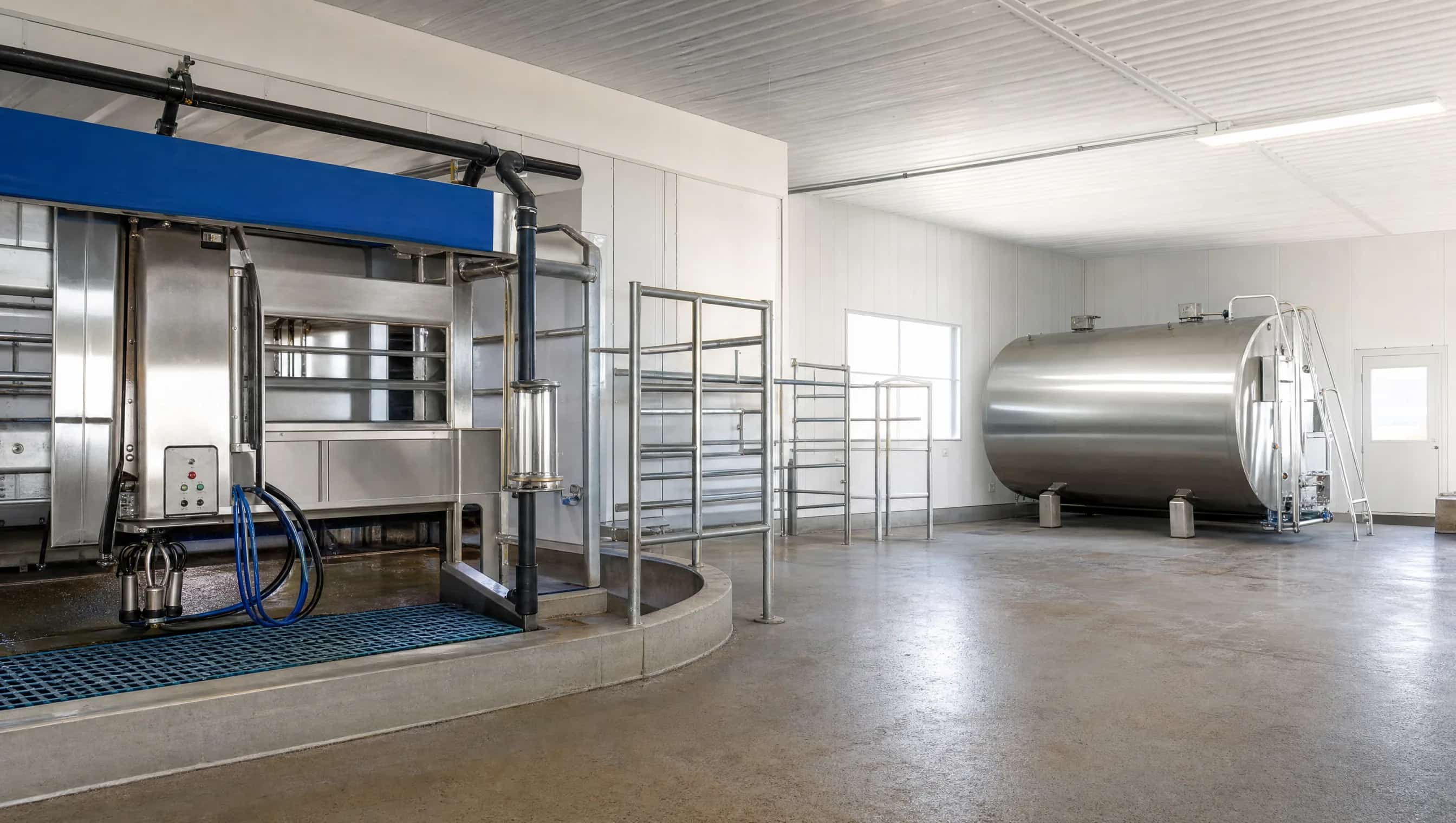
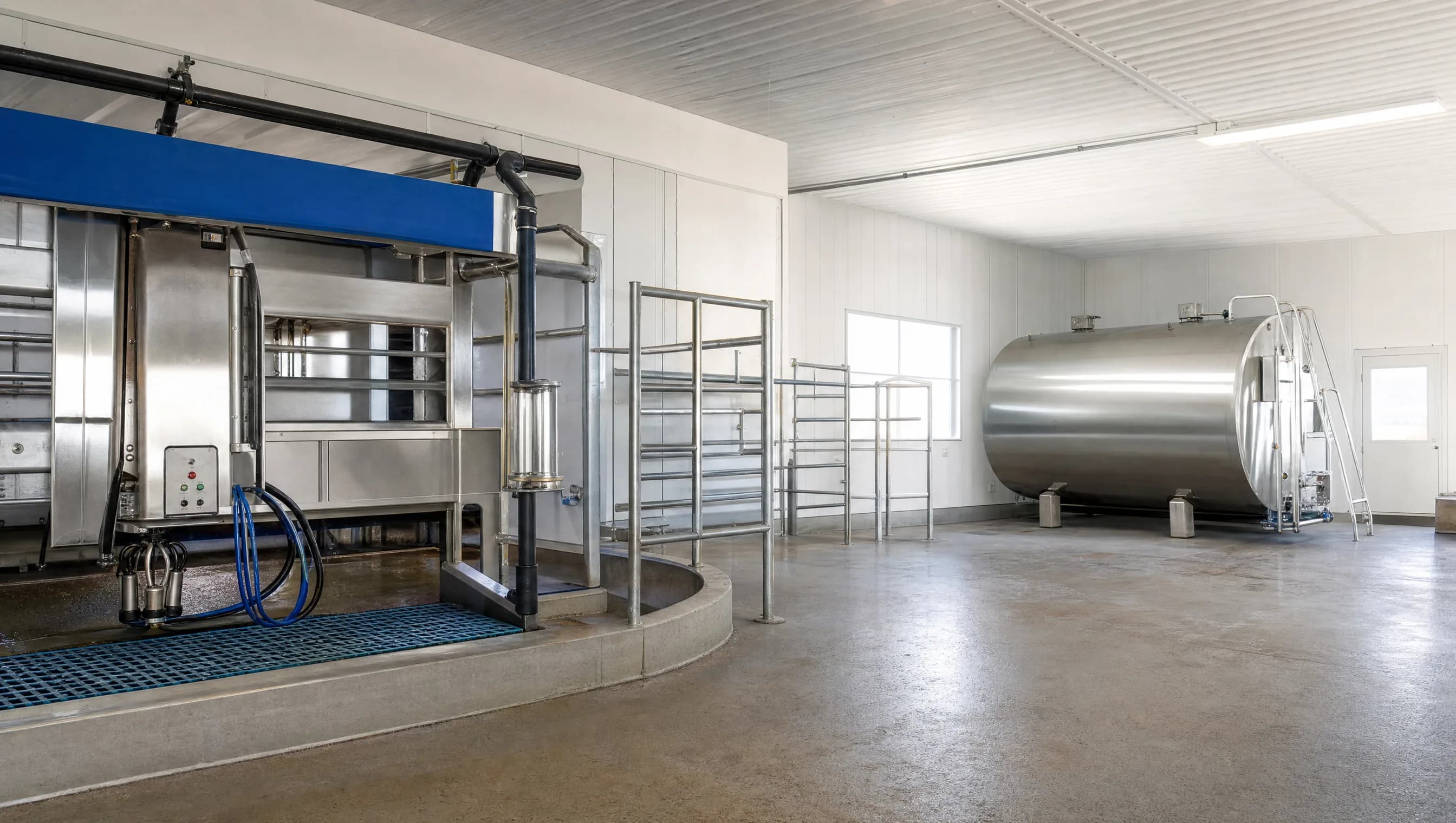
Dairy and livestock files are placed with major Canadian banks and with institutions that lend into agriculture year in and year out. Robotic and parlour milking systems, bulk tanks, cooling and milk handling, feed mixers, conveyors and total mixed ration systems, ventilation, barn automation and bedding equipment, and manure handling and separation all qualify, new or used. A barn retrofit travels as a single file, because ventilation, feed and milking equipment are commissioned in the same week and tested as one system.
Robotics change the labour equation, not just the barn
Automated milking is usually bought to solve a labour problem rather than a production one. It shifts a daily hired-labour cost into a capital asset, which is a change in the shape of the farm's costs as much as the level, and it is why the payback case is normally argued in hired hours rather than in litres. Structures can be set against that, with terms matched to the real service life of the robot rather than a short horizon.
Milk cheques are monthly, so payments can be too
Dairy produces one of the most regular revenue streams in agriculture, and payment schedules can be aligned to it directly. Livestock operations outside supply management run on a very different rhythm — calving, feeding and marketing cycles that concentrate income in windows — and those take seasonal structures instead. We build to whichever applies rather than defaulting to a flat monthly schedule.
Quota, herd and equipment are separate decisions
Financing equipment is not financing quota or livestock, and keeping the equipment structure distinct keeps the farm's borrowing capacity available for the parts of the operation that need it most. Applications above $250,000 require financial statements. Give us the barn, the herd size and the system going in, and the schedule comes back shaped to the milk cheque.